Monthly Field Guide
What to look for each month across all groups — based on real observation data from New England.
September — Fall
428 species across 15 groups · 300,217 observations · 74 new this month

Plants
30 species · 79,936 observations
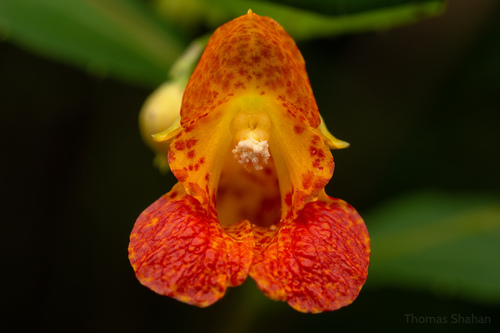
common jewelweed
Last chanceImpatiens capensis
4,267 obs
Plants continue flowering until the first hard frost, often still blooming in September and early October. Seed pods are most abundant and 'explosive' during this season, making it perfect for demo...
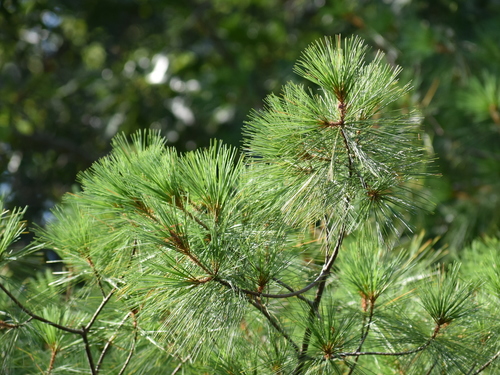
eastern white pine
Pinus strobus
4,256 obs
Older needles (2-3 years old) turn yellow and drop, which is normal - don't worry, your white pine isn't dying! New cones begin forming and older cones mature to brown.
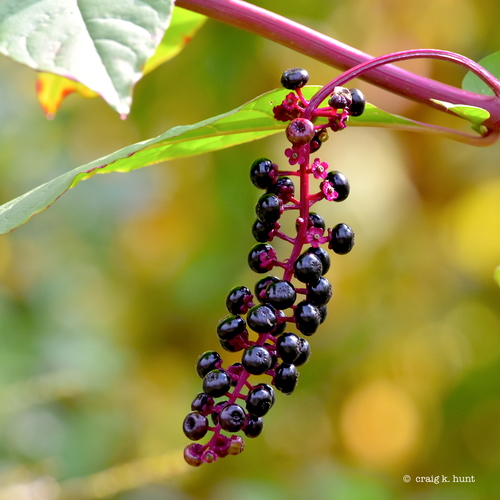
American pokeweed
Phytolacca americana
4,006 obs
Berries ripen from red to dark purple, creating striking upright clusters that attract birds. Leaves may yellow before dropping, and stems become deeply colored.
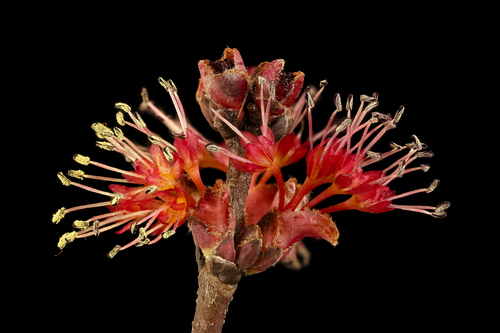
red maple
Acer rubrum
3,778 obs
Often the first tree to turn color, displaying brilliant reds, oranges, and yellows. Fall color can vary dramatically even between trees in the same area.
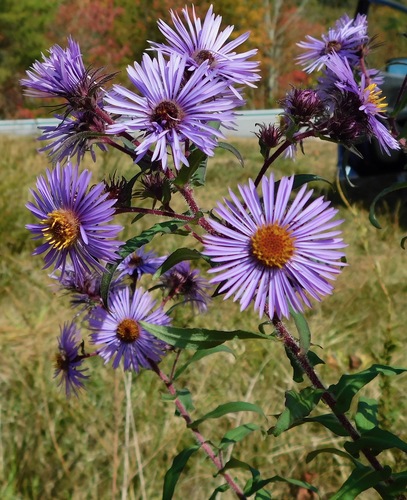
New England aster
NewSymphyotrichum novae-angliae
3,684 obs
Peak blooming occurs from August through October, creating spectacular purple displays. Seeds develop and disperse through November, creating fluffy white seed heads.
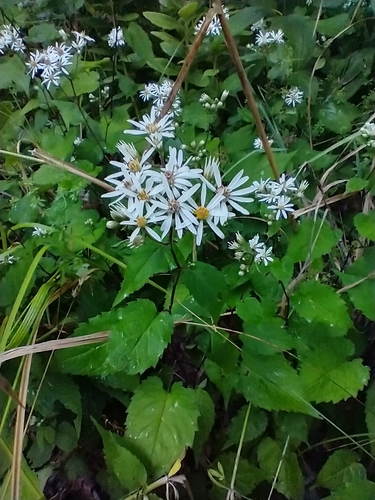
White Wood Aster
Last chanceEurybia divaricata
3,320 obs
Prime identification season when white daisy-like flowers bloom in flat-topped clusters from late August through October. Seeds develop into fluffy white dispersal heads that persist into late fall.
Insects
30 species · 76,866 observations
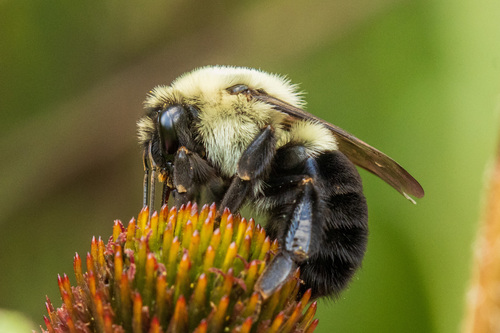
Common Eastern Bumble Bee
Bombus impatiens
12,020 obs
New queens and males emerge for mating flights, so you might see larger individuals again. Workers continue foraging on late-season flowers like asters and goldenrod until the first hard frosts.
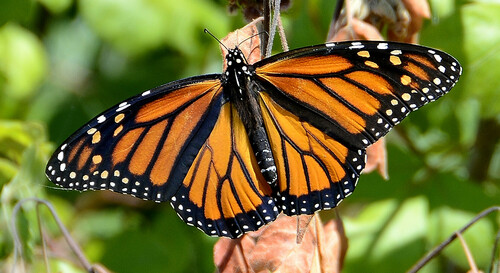
Monarch
Danaus plexippus
7,069 obs
The famous migration begins in late August and September, with monarchs clustering in large numbers and flying steadily southward. These fall butterflies are the super-generation that will make the...
Monarch
Danaus plexippus
7,069 obs
The famous migration begins in late August and September, with monarchs clustering in large numbers and flying steadily southward. These fall butterflies are the super-generation that will make the...
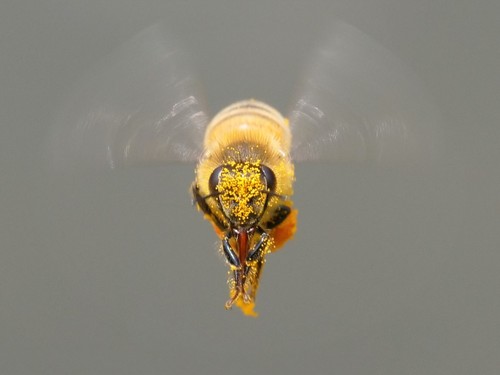
Western Honey Bee
Apis mellifera
5,184 obs
Numbers remain high as bees frantically gather nectar from late-season flowers like goldenrod and asters to stock up for winter. Workers may seem more focused and hurried in their movements.
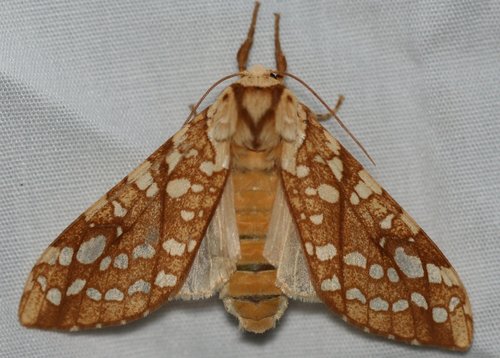
Hickory Tussock Moth
Lophocampa caryae
4,228 obs
Mature caterpillars become most visible in early fall as they finish feeding and search for pupation sites. They may wander considerable distances from their host trees.
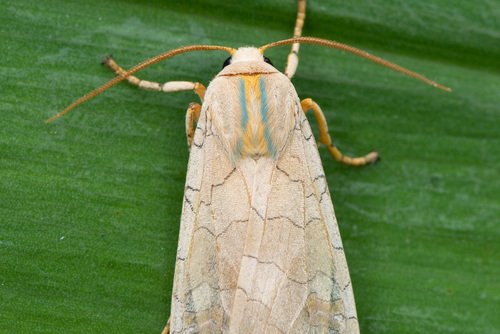
Banded Tussock Moth
Last chanceHalysidota tessellaris
3,056 obs
Mature caterpillars are most visible as they wander looking for places to pupate, often crossing paths and climbing down trees.
Birds
30 species · 32,498 observations
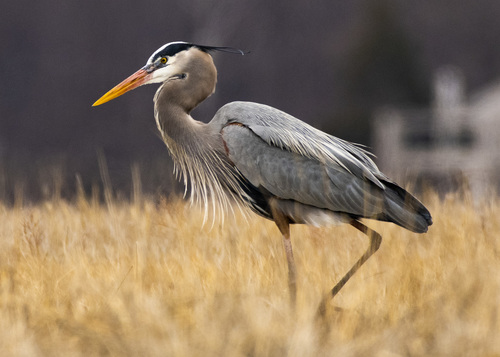
Great Blue Heron
Ardea herodias
2,223 obs
Migration brings increased numbers to New England waters as northern birds pass through. Adults lose their breeding plumes but remain active hunters preparing for winter.
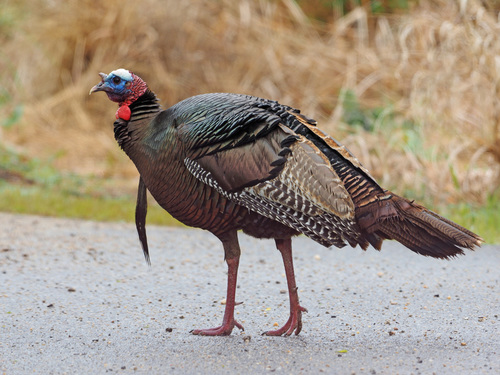
Wild Turkey
Meleagris gallopavo
2,088 obs
Large flocks gather to feed on acorns and nuts. This is when you're most likely to see impressive groups of 20+ birds moving through the woods together.
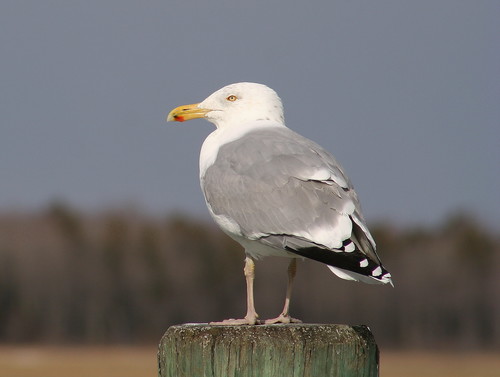
American Herring Gull
Larus smithsonianus
1,888 obs
Mixed flocks of adults and confusing brown juveniles gather at beaches and landfills. Adults start showing more wear in their plumage as they molt.
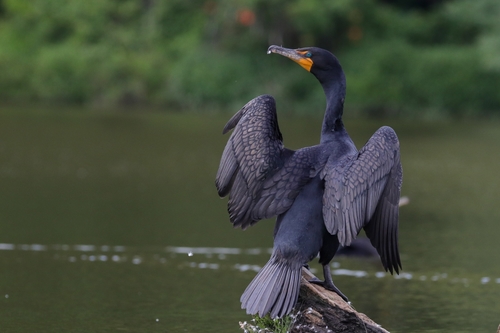
Double-crested Cormorant
Nannopterum auritum
1,856 obs
Large flocks gather before migration, creating impressive roosting congregations on favorite perches. Best time to see multiple birds together.
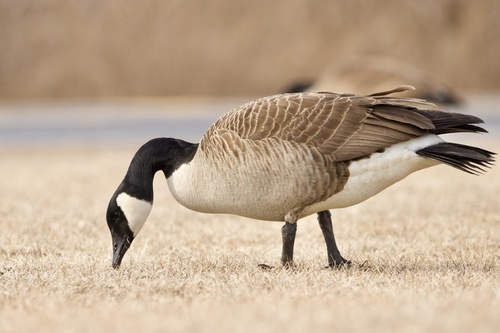
Canada Goose
Branta canadensis
1,831 obs
Migration season brings spectacular V-formations overhead with their iconic honking calls. Large flocks gather at staging areas like reservoirs and coastal marshes, though many year-round residents...
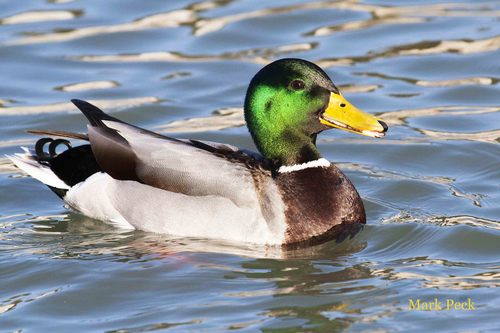
Mallard
Anas platyrhynchos
1,816 obs
Large flocks gather as northern migrants join year-round residents, and males begin molting back into their handsome breeding colors with fresh, bright plumage emerging.
Fungi
30 species · 28,049 observations
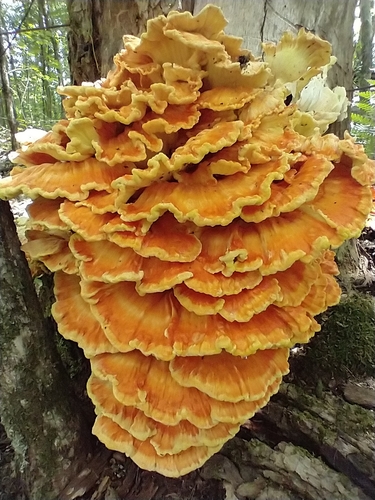
chicken of the woods
Laetiporus sulphureus
2,153 obs
Still actively fruiting into autumn, though specimens may be more weathered. Earlier summer specimens will have faded to pale colors and become tough and woody.
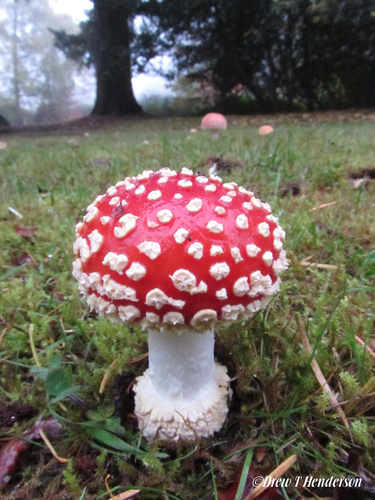
Fly Agaric
Amanita muscaria
1,887 obs
Peak season from September through October. Fresh specimens are most abundant and display the brightest colors before first frost.
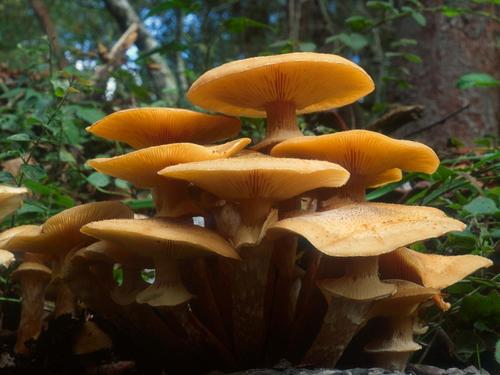
Honey Mushroom
NewArmillaria mellea
1,751 obs
Prime honey mushroom season from September through November when large flushes appear after autumn rains. This is when you'll see the most dramatic displays around infected trees.
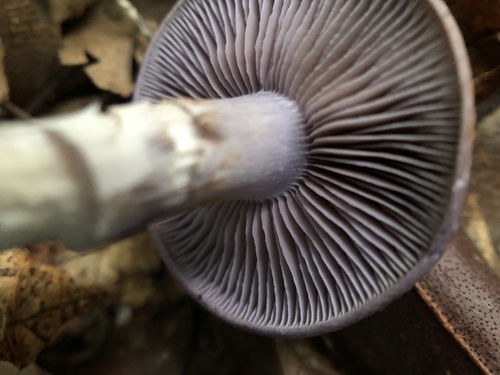
Viscid Violet Cort
Cortinarius iodes
1,643 obs
Peak season for finding Viscid Violet Corts. September through October offers the best chances, especially after autumn rains when many mycorrhizal fungi fruit prolifically.
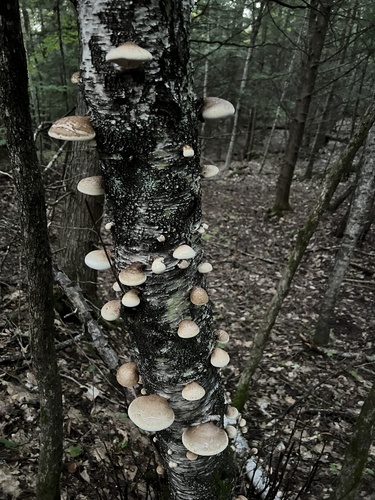
birch polypore
NewFomitopsis betulina
1,561 obs
Brackets continue growing and may develop stronger brown coloration. This is when many become most visible as leaves drop and expose the tree trunks.
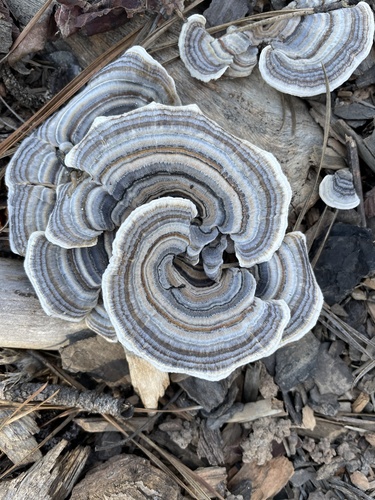
turkey-tail
Trametes versicolor
1,350 obs
Peak season for finding fresh, beautiful specimens as fall moisture returns. Many brackets from earlier in the year remain visible but become tougher.
Amphibians
24 species · 20,533 observations
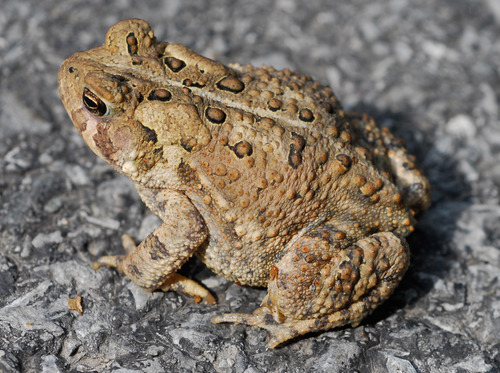
American Toad
Anaxyrus americanus
3,006 obs
Toads begin preparing for winter by eating heavily and seeking deeper shelter. Young toads that metamorphosed earlier in the year are now tiny versions of adults, often seen hopping across paths.
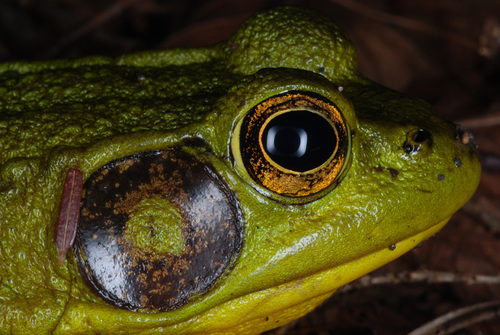
Green Frog
Lithobates clamitans
2,801 obs
Activity gradually decreases as temperatures drop, but you can still find them on warm days. They begin moving to deeper water for winter preparation.
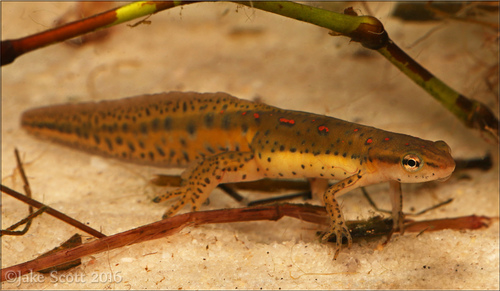
Eastern Newt
Notophthalmus viridescens
2,553 obs
Adults prepare for winter by moving to deeper water. Young efts continue their land phase, often found under logs and rocks.
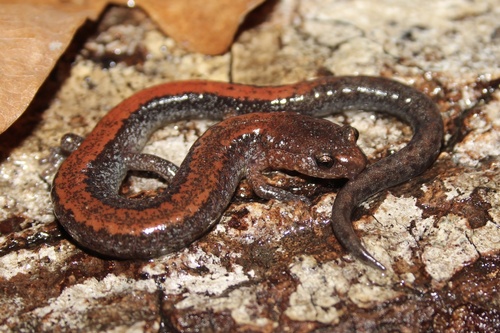
Eastern Red-backed Salamander
Plethodon cinereus
1,996 obs
Commonly encountered during leaf-turning season as they prepare for winter, often found clustered together under large logs or in rock crevices.
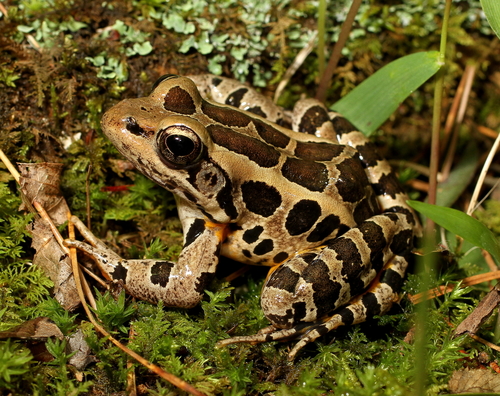
Pickerel Frog
Lithobates palustris
1,883 obs
Recently metamorphosed juveniles disperse from water while adults prepare for hibernation. Both may be found moving through moist woodland areas as they seek winter shelter.
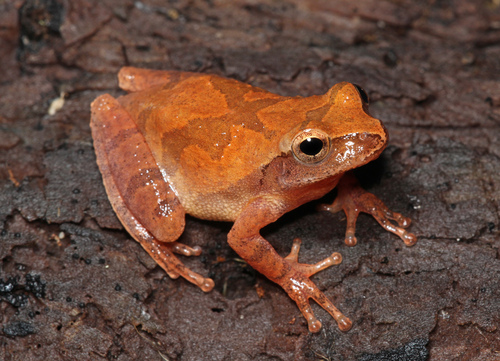
Spring Peeper
Pseudacris crucifer
1,753 obs
Preparing for winter by seeking shelter under logs, bark, and leaf litter. Calling may resume briefly during warm spells but much less intense than spring.
Mammals
30 species · 16,593 observations
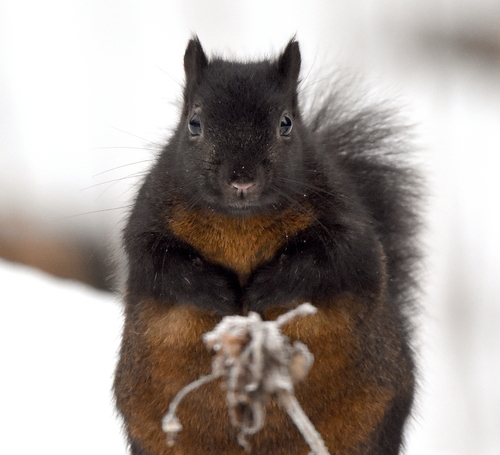
Eastern Gray Squirrel
Sciurus carolinensis
3,304 obs
Hyperactive gathering mode as they collect and bury nuts for winter storage. You'll see them constantly on the move, cheeks bulging with acorns. Their memory for cache locations is remarkable durin...
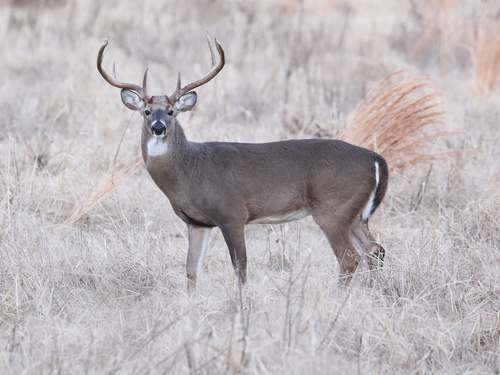
White-tailed Deer
Odocoileus virginianus
2,220 obs
Breeding season brings dramatic behavior changes — bucks become bold and aggressive, their necks swell with muscle, and they make scrapes in the ground that smell musky. Coats begin turning gray-br...
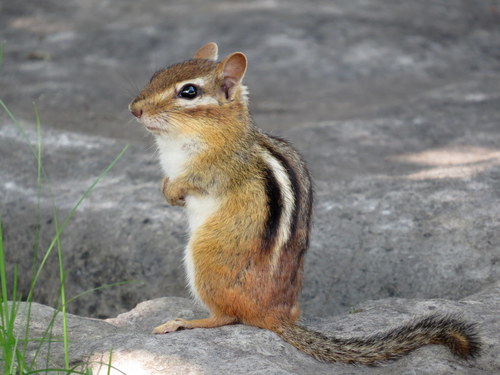
Eastern Chipmunk
Tamias striatus
1,946 obs
Frantic preparation mode as they stuff cheek pouches with acorns, nuts, and seeds. Their fur becomes thicker and more vibrant, and they may appear noticeably plumper as they build fat reserves.
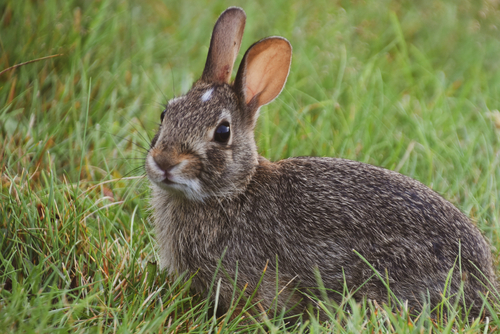
Eastern Cottontail
Sylvilagus floridanus
1,522 obs
Developing thicker, grayer winter coats and feeding heavily to build fat reserves. Often seen gathering near reliable food sources like gardens and bird feeding areas.
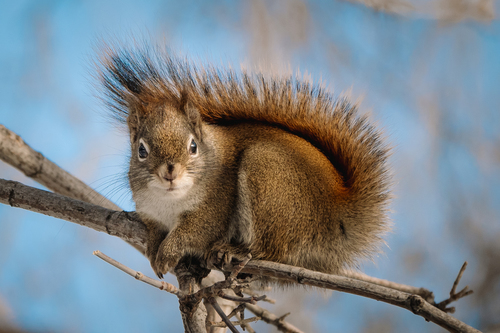
American Red Squirrel
Tamiasciurus hudsonicus
956 obs
Frenzied cone harvesting activity with constant chattering. Middens grow rapidly as they prepare for winter storage.
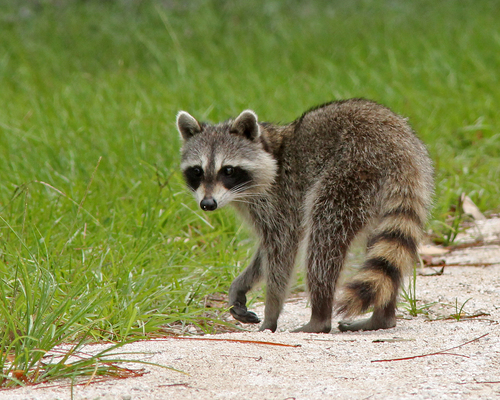
Common Raccoon
Procyon lotor
715 obs
Raccoons bulk up dramatically for winter, sometimes doubling their weight. Their fur becomes noticeably thicker and more luxurious. Increased activity around food sources like fruit trees and garba...
Arachnids
30 species · 14,316 observations
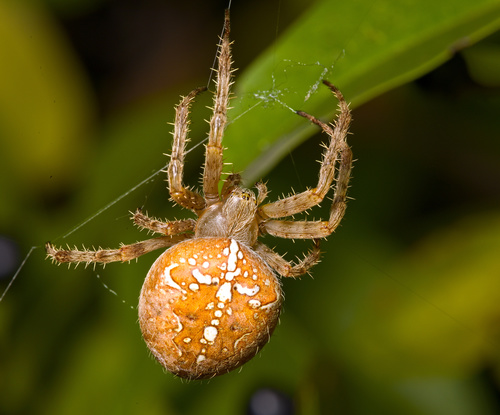
Cross Orbweaver
Araneus diadematus
1,603 obs
Mating season brings males wandering in search of females. Females create egg sacs and their webs may appear more tattered as they focus energy on reproduction.
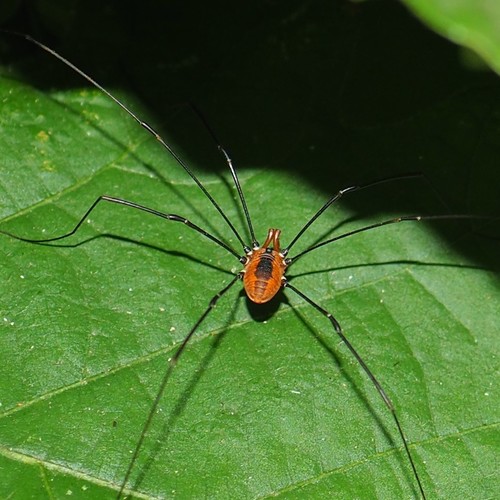
Eastern Harvestman
Leiobunum vittatum
1,315 obs
Most abundant and noticeable as they seek mates and lay eggs, often gathering in groups in tree holes, wood piles, or other sheltered spots to stay warm.
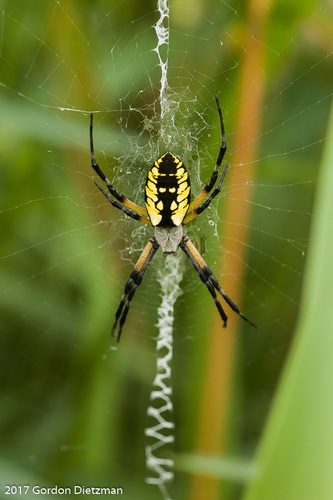
Yellow Garden Spider
Argiope aurantia
1,267 obs
Females are at their absolute largest and most noticeable as they prepare to lay eggs, while males can often be found on the edges of female webs during mating season.
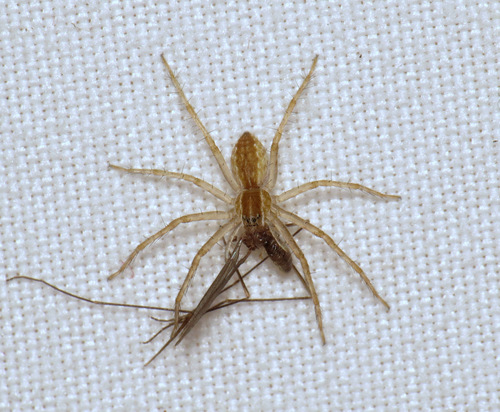
American Nursery Web Spider
Pisaurina mira
936 obs
Spiderlings disperse from nursery webs and adults continue hunting until first frost. Late fall is when you might spot the last generation of young spiders establishing territories.
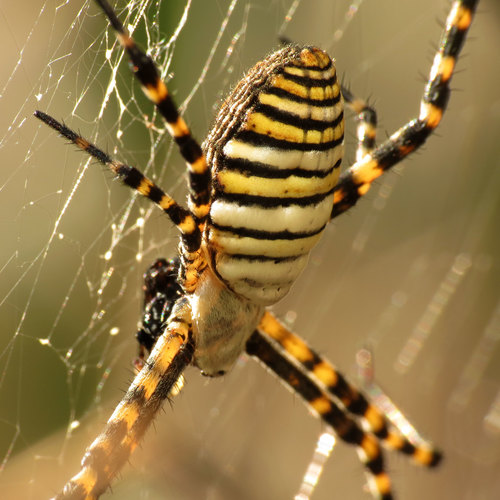
Banded Garden Spider
Argiope trifasciata
883 obs
Peak season when mature females create their largest, most visible webs from early September through October as they prepare for mating and egg-laying.

Spotted Orbweaver
Neoscona crucifera
761 obs
Peak season for observation! Mature females reach full size and often become active during daylight hours. This is when you'll see the most impressive webs and largest, most colorful spiders.
Reptiles
30 species · 8,875 observations
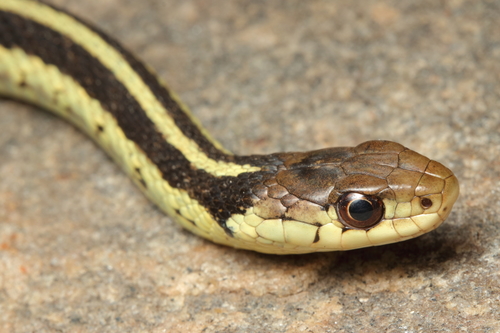
Common Garter Snake
Thamnophis sirtalis
2,656 obs
Still active but increasingly focused on feeding heavily before winter, making them bolder about hunting in open areas. Young snakes born in late summer are now pencil-thin miniatures of adults, pe...
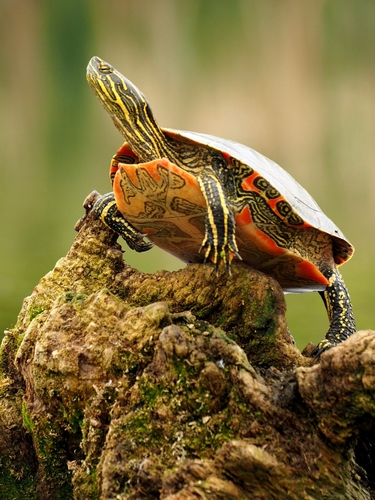
Painted Turtle
Chrysemys picta
1,706 obs
Turtles remain active on warm days but begin preparing for winter, spending more time feeding and less time basking as temperatures cool.
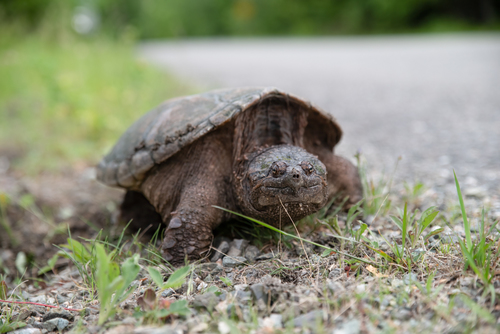
Common Snapping Turtle
Chelydra serpentina
1,332 obs
Still active but beginning to slow down as temperatures drop. They start moving toward deeper water areas where they'll spend the winter.
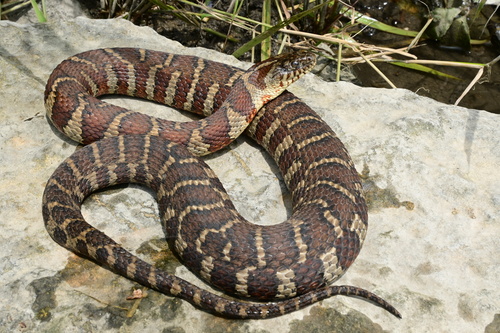
Common Watersnake
Nerodia sipedon
688 obs
Increase basking behavior to build up energy reserves before winter. Young snakes born in late summer are now more visible as they hunt actively before their first winter.
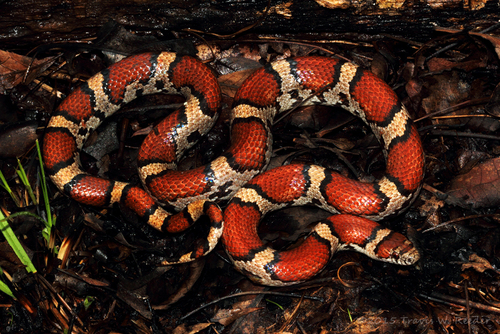
Eastern Milksnake
Lampropeltis triangulum
474 obs
Breeding season occurs in late summer/early fall, making them slightly more visible as they search for mates. They begin seeking winter shelter in October as temperatures drop.
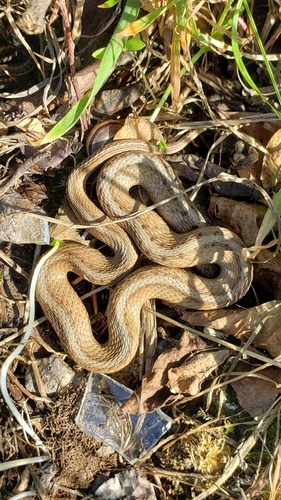
DeKay's Brownsnake
Storeria dekayi
292 obs
Continues feeding heavily before winter, often concentrated around compost piles and leaf litter where earthworms are abundant. Still active on warm October afternoons.
Mollusks
30 species · 6,721 observations
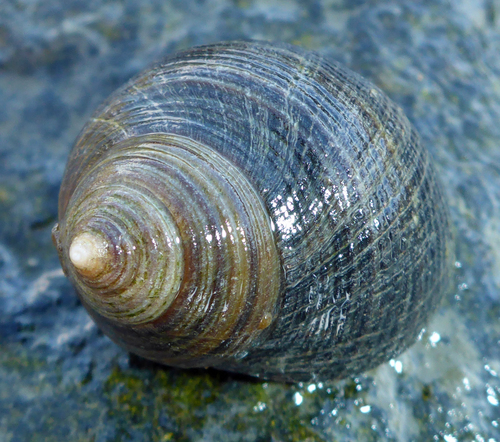
Common Periwinkle
Littorina littorea
846 obs
Still active but beginning to cluster more tightly in crevices. Shell colors often appear most vibrant after summer algae growth.
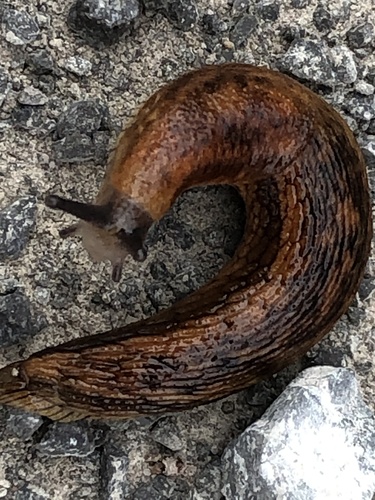
Western Dusky Slug
Arion subfuscus
605 obs
Very active as they feed heavily before winter, often seen on fallen leaves and around decomposing organic matter. This is prime slug-spotting season in New England.
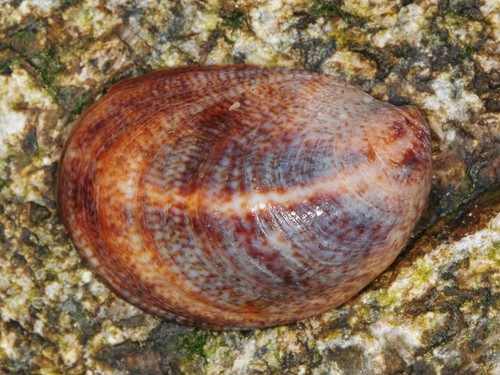
Common Atlantic Slippersnail
Crepidula fornicata
503 obs
Still active but preparing for winter. Good time to find shells as autumn storms may wash specimens ashore.
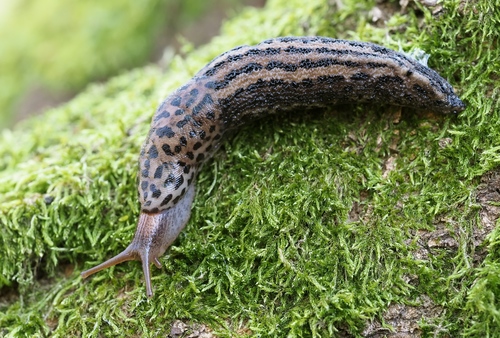
Leopard Slug
Limax maximus
408 obs
Peak activity period as they feed heavily before winter, often found near compost piles and fallen leaves. This is when you're most likely to witness their spectacular aerial mating displays.
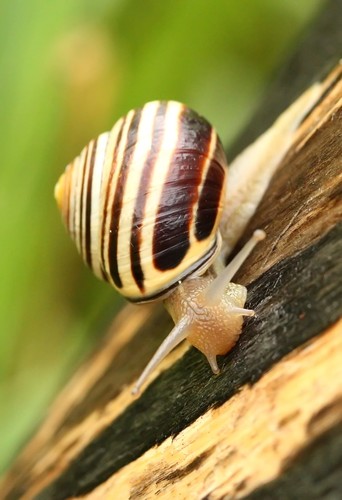
Brown-lipped Snail
Cepaea nemoralis
365 obs
Snails are busy feeding before winter, often seen on fallen leaves and in compost areas. Empty shells become more noticeable as vegetation dies back.
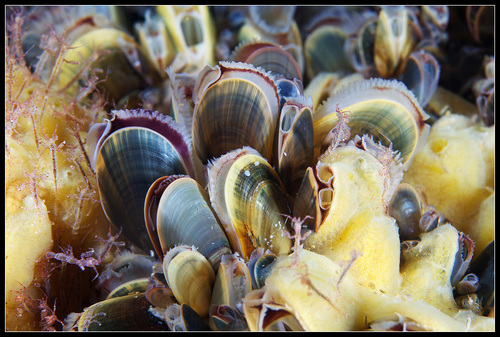
Blue Mussel
Mytilus edulis
362 obs
Mussels continue growing rapidly, adding new shell material before winter. Storm activity increases, washing more empty shells onto beaches for easy collecting and identification.
Crustaceans
30 species · 6,526 observations
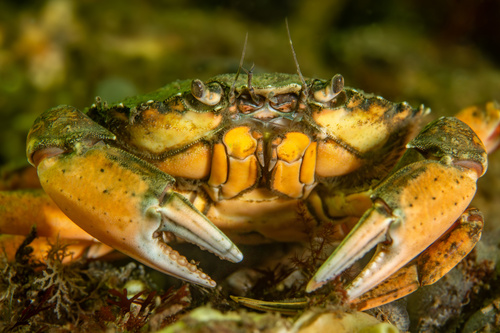
European Green Crab
Carcinus maenas
1,157 obs
Still very active but beginning to move to deeper waters. Great time for observation as they're often foraging heavily before winter.
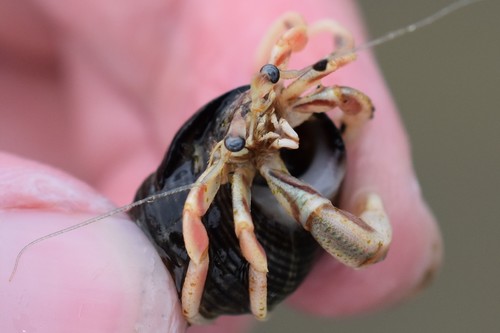
Long-claw Hermit Crab
Pagurus longicarpus
540 obs
Still active but beginning to move to slightly deeper waters. Shell competition intensifies as crabs prepare for winter dormancy.
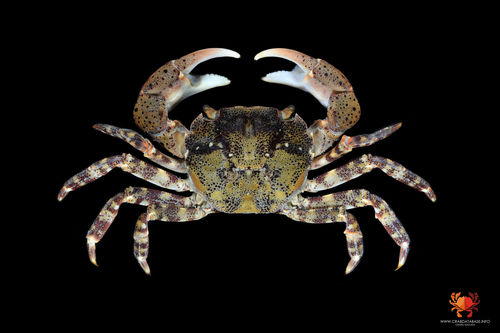
Asian Shore Crab
Hemigrapsus sanguineus
487 obs
Still very active but beginning to move to slightly deeper water. Great time to spot them as they're often fattening up before winter.
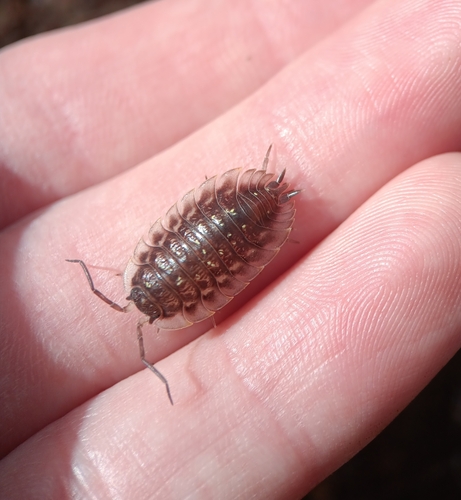
Common Shiny Woodlouse
Oniscus asellus
453 obs
Still quite active as they prepare for winter, often found in large groups under the same log or stone. They're gathering in the dampest, most protected spots they can find.
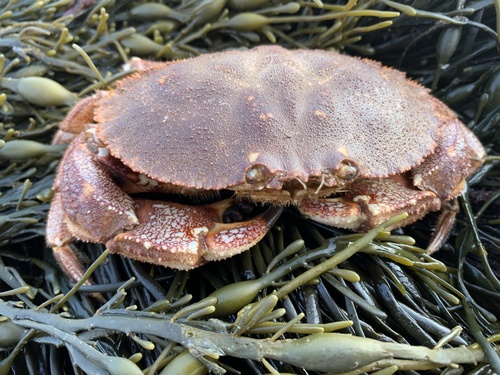
Jonah Crab
Cancer borealis
407 obs
Crabs begin moving to deeper waters as temperatures drop. Larger specimens may still be found in protected tide pools and under rocks during extreme low tides.
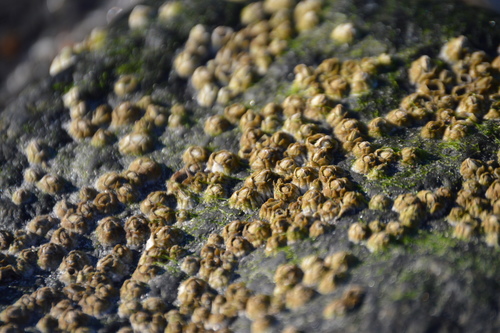
Northern Acorn Barnacle
Semibalanus balanoides
398 obs
Adults continue feeding to build energy reserves for winter, and you may notice some barnacles beginning to look more weathered from summer wave action.

Lichens
30 species · 4,436 observations
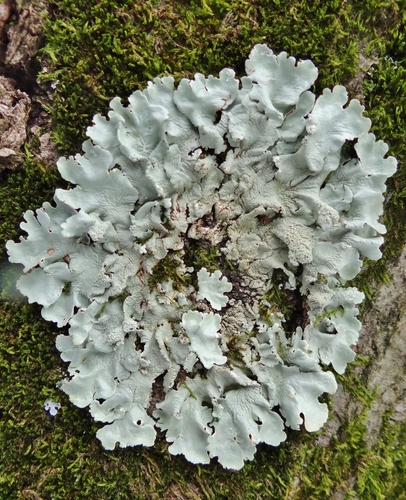
common greenshield lichen
Flavoparmelia caperata
643 obs
Remains visible and identifiable as leaves drop, often becoming more prominent on tree trunks. Color shifts between yellow-green and bright green with autumn rains.
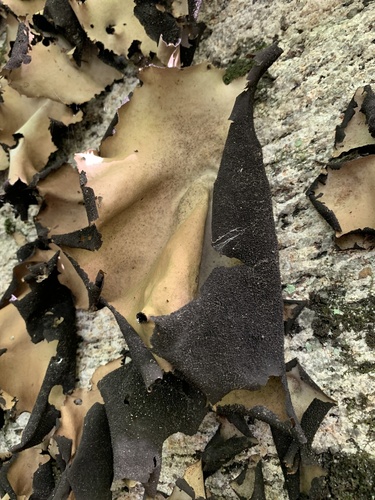
Smooth Rock Tripe
Umbilicaria mammulata
356 obs
Cool, moist fall conditions bring out the best coloration and flexibility, making it an ideal time for identification and photography as the lichen darkens and becomes more prominent against the rock.
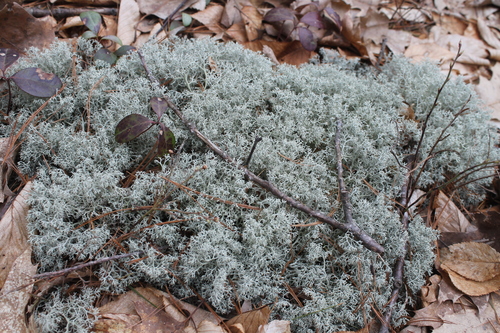
gray reindeer lichen
Cladonia rangiferina
322 obs
Takes on a subtle warmth in color as autumn light filters through, and increased moisture from fall rains makes it more supple to the touch.
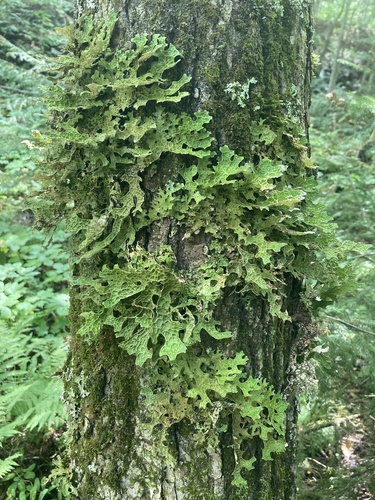
Tree Lungwort
Lobaria pulmonaria
291 obs
Remains visible but may be partially obscured by falling leaves. The cooler, damper weather brings out richer colors and makes the texture more pliable to touch.
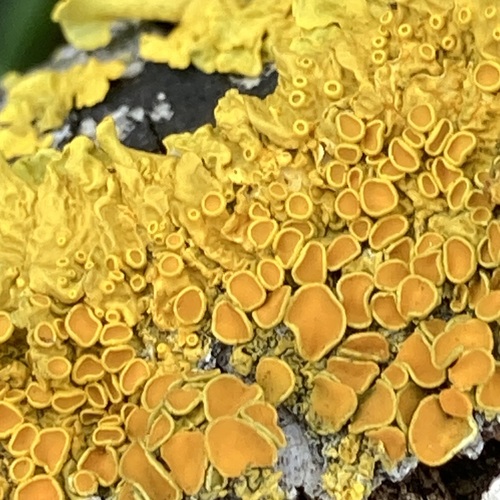
Common Sunburst Lichen
Xanthoria parietina
201 obs
Colors may appear slightly muted but the lichen remains easily identifiable. Good time to observe differences between sunny and shaded colonies.
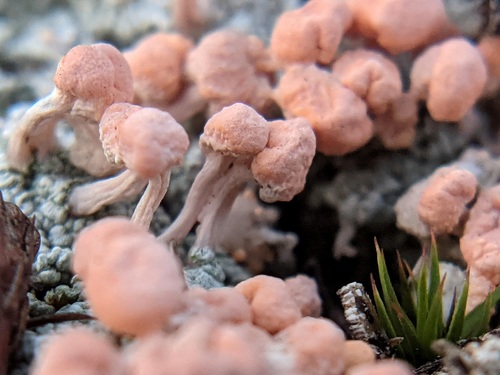
Pink Earth Lichen
Dibaeis baeomyces
193 obs
Often produces a fresh flush of bright pink fruiting bodies in the cooler, moister conditions. The contrast against fallen leaves makes identification easier.
Fish
30 species · 2,768 observations
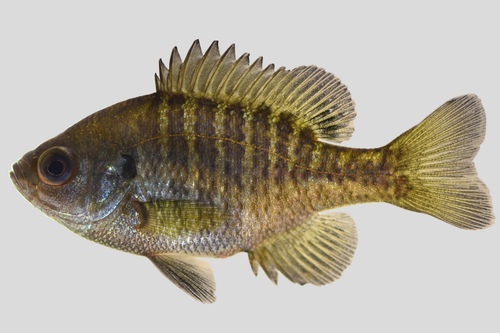
Bluegill
Lepomis macrochirus
268 obs
Bluegills feed heavily to prepare for winter, often gathering in deeper areas but still accessible in shallow bays on warm afternoons. Their colors may become slightly more muted as water temperatu...
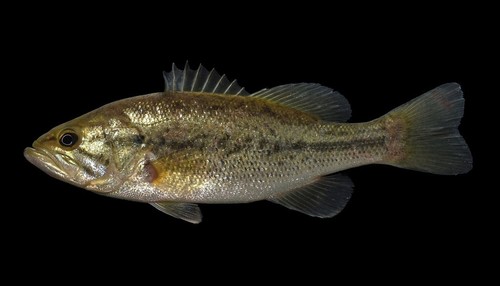
Largemouth Bass
Micropterus nigricans
180 obs
Fish actively feed to build reserves for winter, often moving to deeper water but still approachable near structure. Colors may appear more muted as water temperatures drop.
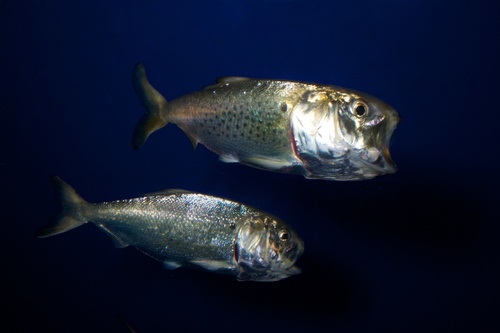
Atlantic Menhaden
Brevoortia tyrannus
175 obs
Schools begin their southern migration, often hugging the coastline closely. This is when beach-walkers are most likely to encounter schools in shallow water.
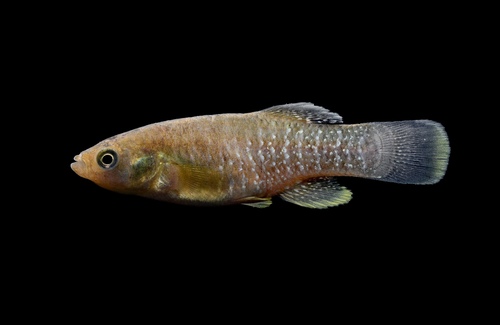
Mummichog
Fundulus heteroclitus
155 obs
Fish begin forming larger schools and may move to slightly deeper waters. Their colors become more subdued as breeding activity decreases.
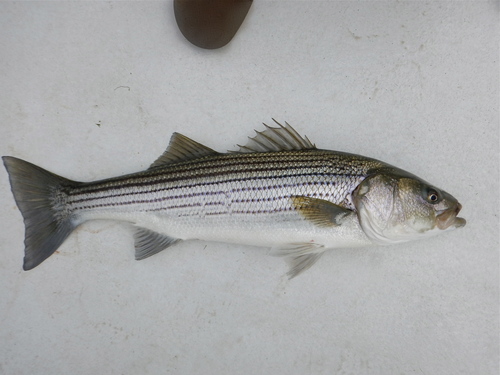
Striped Bass
Morone saxatilis
125 obs
Fall migration south begins with fish feeding heavily to build energy reserves. Colors may appear slightly darker.
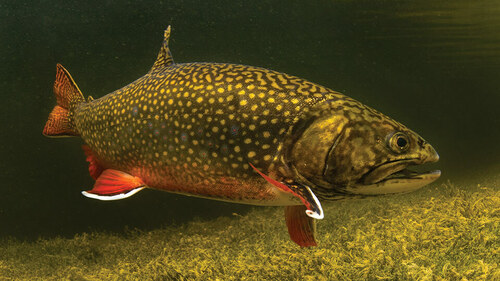
Brook Trout
Salvelinus fontinalis
118 obs
Spawning season brings the most spectacular colors - reds become deeper, whites more brilliant. Males develop hooked jaws and become more territorial.

Myriapods
30 species · 1,117 observations
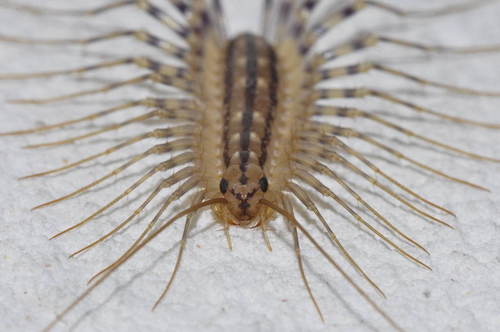
House Centipede
Scutigera coleoptrata
293 obs
Remain active indoors as outdoor temperatures drop, often becoming more noticeable as they move to warmer areas of the house and continue hunting for overwintering insects.

American Giant Millipede Complex
Narceus americanus
226 obs
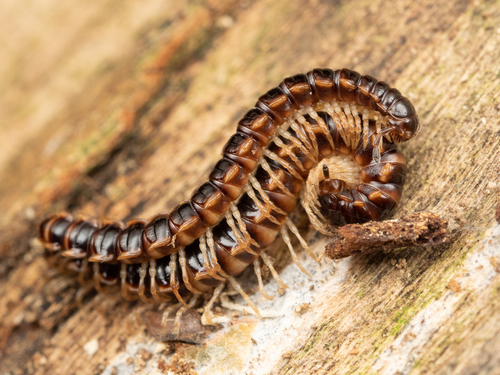
Greenhouse Millipede
Oxidus gracilis
170 obs
Very active as they feed on newly fallen leaves and prepare for winter. This is often the best time to spot them as they're out processing the abundant organic matter.
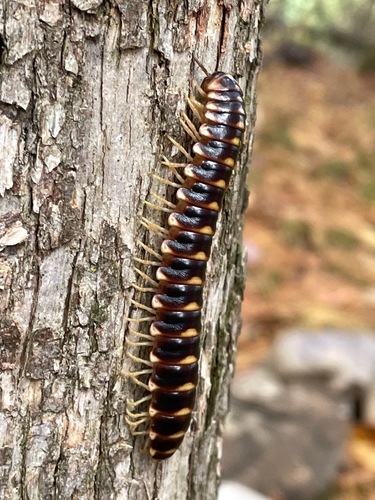
Rudiloria trimaculata
Rudiloria trimaculata
124 obs
Still active as they prepare for winter, often concentrating under logs and in deep leaf litter. The fresh fallen leaves provide both food and shelter.
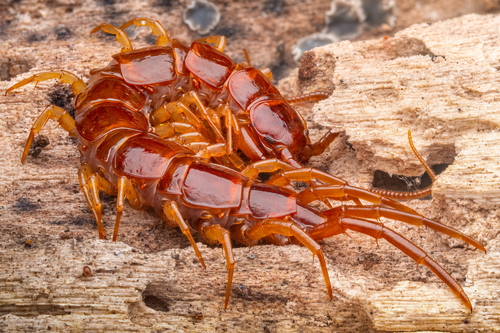
Brown Centipede
Lithobius forficatus
69 obs
Still quite active but beginning to seek deeper shelter for winter. Often found when cleaning up garden beds or moving firewood.
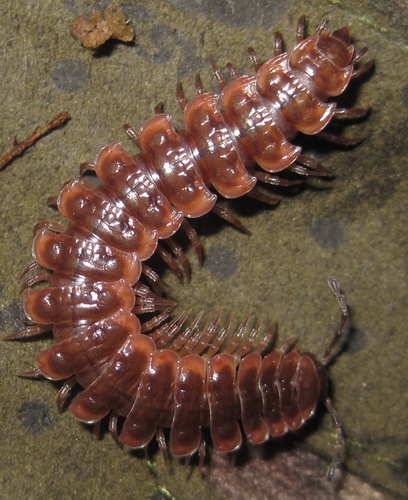
Common Pink Flat-back
Pseudopolydesmus serratus
52 obs
Very active as they feed on freshly fallen leaves. Often found in deeper leaf litter as they prepare for winter dormancy.

Echinoderms
14 species · 562 observations
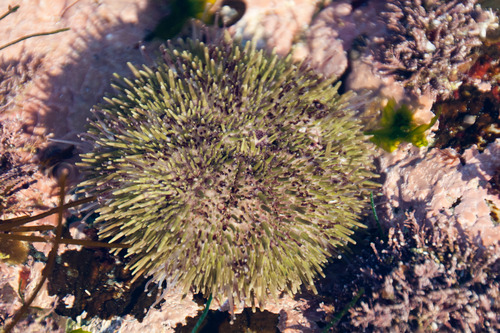
Arctic Green Sea Urchin
Strongylocentrotus droebachiensis
150 obs
Still active but beginning to slow down as waters cool. Good season for tide pooling discoveries as summer crowds thin out.
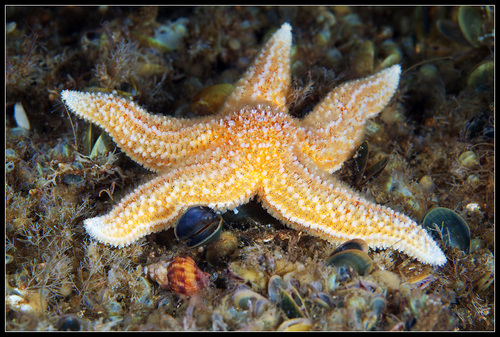
Common Sea Star
Asterias rubens
143 obs
Still active but may move to slightly deeper waters as temperatures drop. Good time to find them on dock pilings and breakwaters.
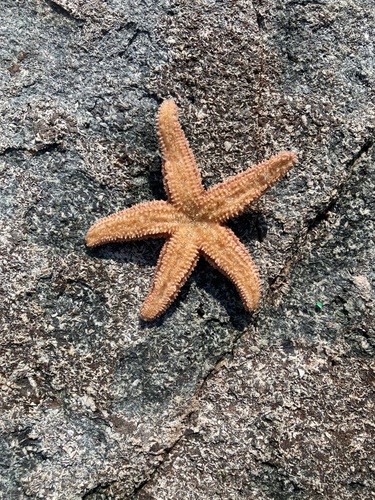
Forbes's Sea Star
Asterias forbesi
117 obs
Still active and visible, often moving to slightly deeper waters as temperatures begin to cool.
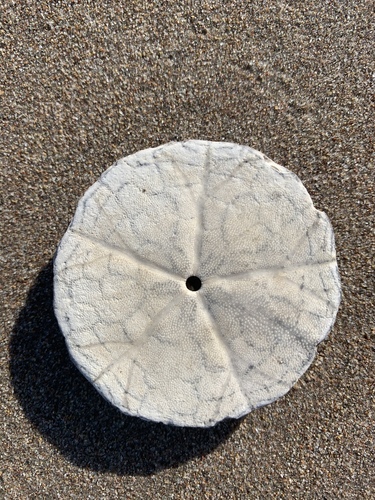
Common Sand Dollar
Echinarachnius parma
57 obs
Storm activity increases the number of shells washing ashore. This is often the best season for collecting well-preserved white specimens as autumn storms churn up the sea floor.
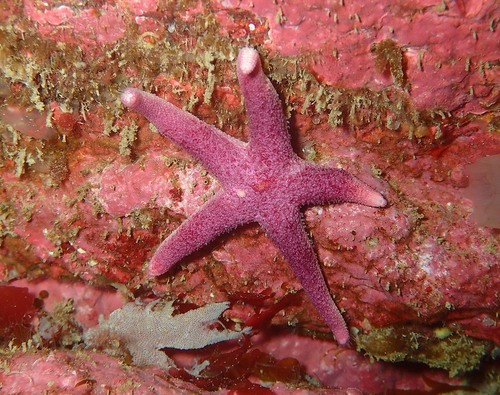
Northern Blood Star
Henricia sanguinolenta
30 obs
Still active but beginning to move to slightly deeper waters. Late fall diving may reveal them on exposed rocky ledges.
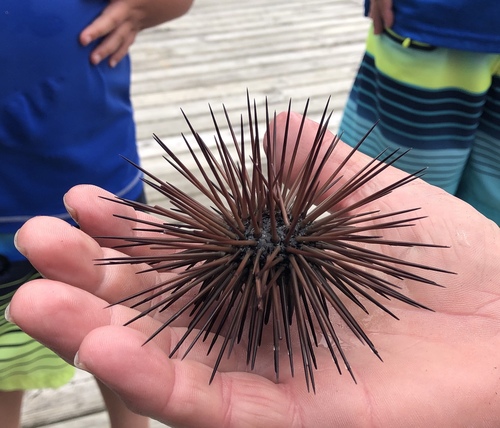
Purple-brown Urchin
Arbacia punctulata
17 obs
Still active but beginning to seek deeper water and more sheltered spots as storms increase.

Cnidarians
30 species · 421 observations
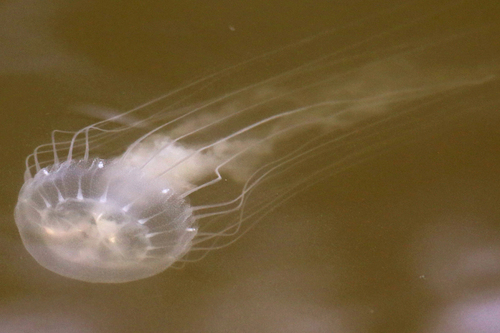
Bay Nettle
Chrysaora chesapeakei
51 obs
Numbers begin to decline as water temperatures cool, though some individuals may persist into early fall in protected bays.
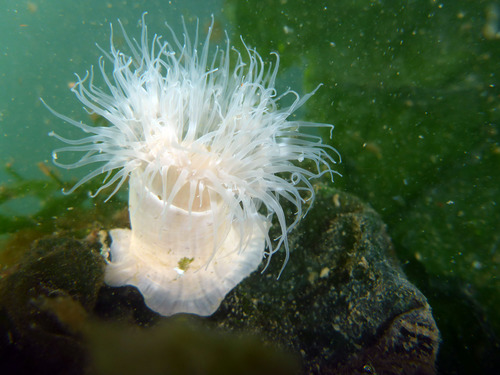
Plumose Anemone
Metridium senile
47 obs
Still active and feeding heavily before winter, though tentacles may contract more frequently as water temperatures drop and storms increase.
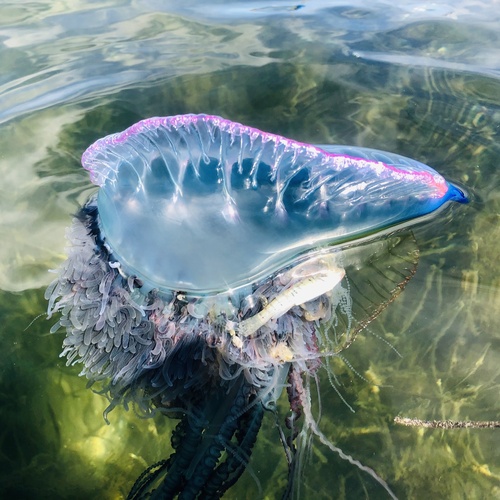
Portuguese Man o' War
Physalia physalis
47 obs
Occasional sightings may continue into early fall during warm years, but they become increasingly rare as water temperatures drop.
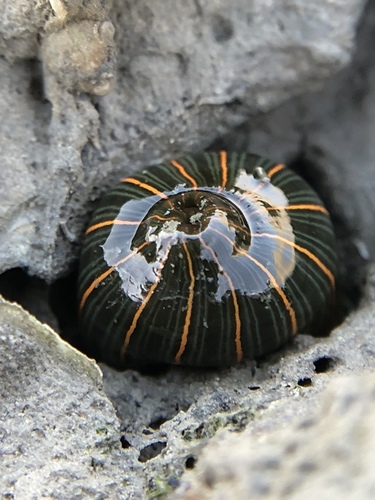
Striped Green Sea Anemone
Diadumene lineata
41 obs
Still active but may be less extended as water temperatures drop. Stripes remain visible even when contracted.
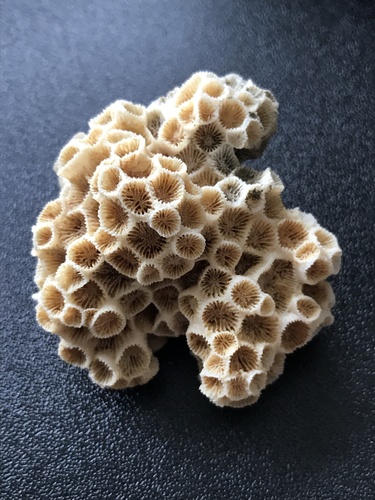
Northern Star Coral
Astrangia poculata
39 obs
Still active but beginning to slow down as temperatures drop. Colonies remain clearly visible and identifiable on hard surfaces.
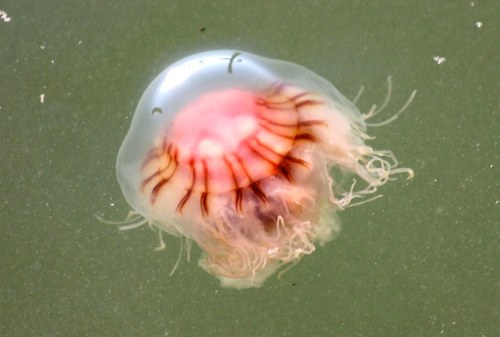
Dwarf Lion's Mane Jelly
Cyanea versicolor
28 obs
Continue to be present in early fall, though numbers typically start declining as water temperatures drop toward winter.